
An MOT advisory note means your car passed its test, but the tester spotted something that is worn, ageing, or heading in the wrong direction. It is not a failure. It does not stop you driving. But it is a warning — and how seriously you take it could determine whether your car sails through its next MOT or fails it.
This guide explains exactly what advisory notes mean, which ones you can monitor and which need urgent attention, how advisories affect your car’s value and insurance, and where to find your car’s full advisory history.
What Is an MOT Advisory Note?
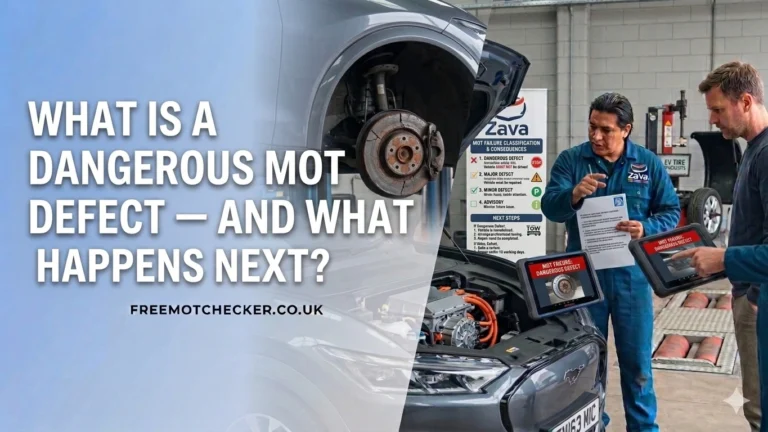
When your car has its MOT test, the tester inspects dozens of components against DVSA minimum standards. The outcome for each item falls into one of four categories:
- Pass — the component meets the required standard
- Minor defect — a small fault noted on the certificate; does not cause a failure
- Major defect — a significant fault that causes the car to fail; must be repaired
- Dangerous defect — an immediate safety risk; the car cannot be driven away
Advisory notes sit outside this formal classification system. They are the tester’s professional observation that something is still within legal limits today but is approaching the point where it may not be next time. Think of them as an early warning rather than a verdict.
For a full explanation of the defect categories and what each means for driving, see our guide: What is a major MOT defect — can you drive home after failing? (coming soon)
Do You Have to Fix MOT Advisories?
No — there is no legal requirement to fix an advisory note. Your car has passed its MOT. You can drive it freely for the next twelve months, your insurance remains valid, and you are not breaking any law by leaving an advisory unaddressed.
However, that is the legal position, not necessarily the sensible one.
Advisories are the single strongest predictor of what will fail at your next MOT. A tester marks something as an advisory precisely because it is close to the threshold — it passed today, but only just. If the same component deteriorates at the same rate over the next twelve months, it will very likely cross into Major defect territory by the time the next test comes around.
Ignoring safety-critical advisories — particularly anything relating to brakes, tyres, or steering — also creates a grey area around your insurance. If you are involved in an accident and it can be shown that a known advisory was left unaddressed and contributed to the incident, your insurer may argue that you failed to maintain the vehicle in a roadworthy condition.
How to Read Your Advisory Notes
Advisory notes appear on your MOT certificate and are also stored permanently in the DVSA database. You can view every advisory your car has ever received — across all previous owners — by entering your registration number into our free MOT history checker.
This history is particularly valuable when buying a used car. Repeated advisories for the same component across multiple years signal a recurring problem that has been monitored but never properly fixed. See our guide on how to check a used car’s MOT history before buying (coming soon) for what to look for.
Most Common MOT Advisory Notes — and How Urgent They Are
Not all advisories carry the same weight. Here is a plain-English guide to the most frequently issued advisory notes and how seriously each one deserves to be taken.
Brake pads and discs wearing thin — act soon
This is one of the most common and most important advisories. The tester has measured the brake pad thickness or assessed the disc condition and found it within legal limits, but not by much.
Brake pads wear at different rates depending on driving style, vehicle weight, and whether the car uses regenerative braking (as many hybrids and EVs do). A pad that has six months of life in gentle motorway driving may have two months left in stop-start city conditions. Do not wait twelve months on this one — have the brakes inspected by a garage within one to three months and monitor them in the meantime.
Tyres approaching the minimum tread depth — act soon
The legal minimum tyre tread depth in the UK is 1.6mm across the central three-quarters of the tyre. An advisory for tyre tread means you are above that limit today, but not by enough to comfortably last another twelve months.
Tyre wear accelerates in wet weather and under heavier use. A tyre with 2mm of tread at MOT time will reach the legal limit within a few months of normal driving. Check your tread depth with a gauge monthly and replace before you reach 2mm — leaving it until the legal minimum is both unsafe and likely to result in failure at your next test.
If you have any questions about what tread depth failure looks like at MOT, see our guide: Will a cracked windscreen fail an MOT? (coming soon) — the same measurement principles apply to both tyre limits and windscreen damage zones.
Suspension components showing wear — monitor closely
Advisories for suspension — worn bushes, misting shock absorbers, slight play in a ball joint — tend to worsen gradually but can accelerate suddenly, particularly after a harsh winter or a serious pothole. Suspension issues also affect tyre wear, steering response, and braking stability, so they are not simply a comfort concern.
Have any suspension advisory looked at by a mechanic within three to six months. A minor bush replacement done proactively costs a fraction of the bill for replacing a full suspension arm after it has deteriorated further.
Minor oil leak or exhaust blow — monitor
A light oil weep or a small blow in the exhaust are common advisories that reflect normal ageing in older vehicles. Neither will fail the MOT if kept minor, but both can worsen quickly if ignored.
An oil leak that progresses from a weep to a drip can drop your oil level dangerously low between checks. Check your oil level monthly and keep an eye on the ground beneath where the car is parked. An exhaust blow that expands can eventually cause a failure on grounds of noise or structural integrity.
Windscreen chip — monitor
A small chip outside the driver’s direct line of vision will often be noted as an advisory rather than a failure. Chips can spread into cracks — particularly in cold weather or after a temperature change — and a crack in the wrong area of the windscreen is an automatic failure.
Get chips repaired as soon as possible. Most comprehensive car insurance policies cover windscreen chip repair at no excess cost, so there is little reason to leave it. For the exact rules on what size and location of damage causes a failure, see our guide: Will a cracked windscreen fail an MOT? (coming soon)
Corrosion on body or chassis — assess individually
Surface corrosion on body panels is cosmetic and unlikely to become an MOT issue. Corrosion noted on structural components — particularly around the chassis rails, floor pan, or subframe mounting points — is a different matter entirely. Structural rust can progress to the point where a vehicle is deemed dangerous. If the advisory mentions chassis, subframe, or structural corrosion, have it assessed by a specialist sooner rather than later.
Minor wiper deterioration — fix quickly
Wiper blades are cheap and easy to replace. A wiper advisory is the easiest item on this list to deal with — new blades cost £10 to £30 and fit in minutes. Do not leave it until the next test.
Do Advisories Affect Car Insurance?
Your insurance remains fully valid after a car passes its MOT with advisories. Passing the test — even with notes — is confirmation that the vehicle met the legal standard on the day of inspection.
However, if an accident occurs and the cause is linked to a component that appeared as an advisory on your last MOT, your insurer may investigate whether you took reasonable steps to address the issue. This is particularly relevant for brake, tyre, and steering advisories. There is no definitive legal ruling that an unaddressed advisory automatically invalidates a claim, but it is a complicating factor you are better off avoiding.
Do Advisories Affect Your Car’s Value?
Yes — particularly if there are several of them, or if the same advisory has appeared across multiple consecutive years.
When selling a used car, buyers increasingly check the full MOT history through the DVSA database before agreeing a price. A pattern of repeated, unaddressed advisories signals to a buyer that the car has not been properly maintained, and they will either reduce their offer or walk away. Addressing advisories before selling — or at least being transparent about them — puts you in a stronger negotiating position.
How to View Your Full Advisory History
Every advisory note issued since the DVSA began recording digital MOT results is stored in the official database and accessible to anyone with the vehicle’s registration number. This means you can see not just the advisories from your most recent test, but every advisory the car has received throughout its entire history — including under previous owners.
To view your car’s full advisory history, use our free MOT history checker — enter the registration number and the full record appears instantly.
This is especially useful if you have recently bought a used car and want to understand its full maintenance picture before its next test.
Advisory Notes vs Minor Defects — What Is the Difference?
These two are easy to confuse because neither causes an immediate failure. The distinction matters though.
A minor defect is a formally classified DVSA defect category. It appears on the certificate with a specific defect code and indicates a small but confirmed fault. Minor defects do not cause a failure but are part of the official test record.
An advisory note is the tester’s professional observation — a judgement call that something is worth watching, even though it does not yet meet the threshold of a formal defect. Advisories are not assigned DVSA defect codes.
In practice, both signal the same thing: something to keep an eye on. But minor defects are more formally defined, while advisories carry more of the tester’s professional judgement.
Frequently Asked Questions
Can I drive my car normally after receiving advisory notes? Yes. A car that passes its MOT with advisories is legal to drive. Your certificate is valid and your insurance is unaffected. The advisories are recommendations, not restrictions.
Will I fail next year if I ignore my advisories? Not automatically — but the risk is significant. Most advisories relate to components that are close to the failure threshold. If they continue to wear at the same rate, failure at the next test is likely.
Can I see the advisories from previous years on my car? Yes. Enter your registration number into our free MOT history checker to see every advisory your car has received across its full test history, including under previous owners.
How do I know if an advisory is urgent? Prioritise by safety risk. Brake, tyre, steering, and suspension advisories should be investigated within one to three months. Cosmetic or minor items such as surface corrosion or wiper condition can be monitored but should be addressed before the next test.
Do advisories affect how much I can sell my car for? Yes, particularly if the same advisory has appeared across multiple consecutive MOTs. Buyers view repeated unaddressed advisories as a sign of poor maintenance and will factor this into any offer.
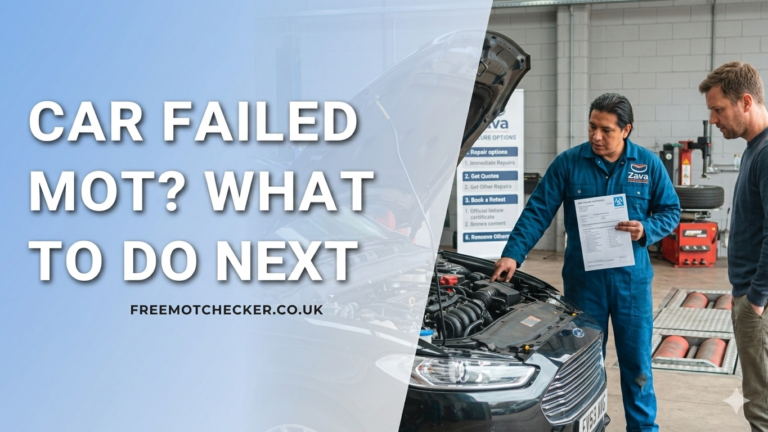
What happens if my car fails its MOT? If faults cross from advisory into Major or Dangerous defect territory, the car fails and cannot legally be driven until repaired and retested. For the full process, see our guide: What happens after an MOT fail — clear steps, rules, and your options.
Last reviewed: April 2026. All information based on current DVSA MOT standards and UK motoring law.
Written by Haseeb — Founder, Free MOT Checker. All guides are reviewed against current DVSA standards and UK motoring law.